Linen, craft, and material culture
From French Flax to Finished Sheets: The Craft Behind Naturepedic Linen
A linen sheet begins long before it reaches a bed. Its character is shaped by a plant in a field, a sequence of decisions at the mill, and the patient transformation of stiff flax into cloth that can soften with use.
Published November 2, 2026
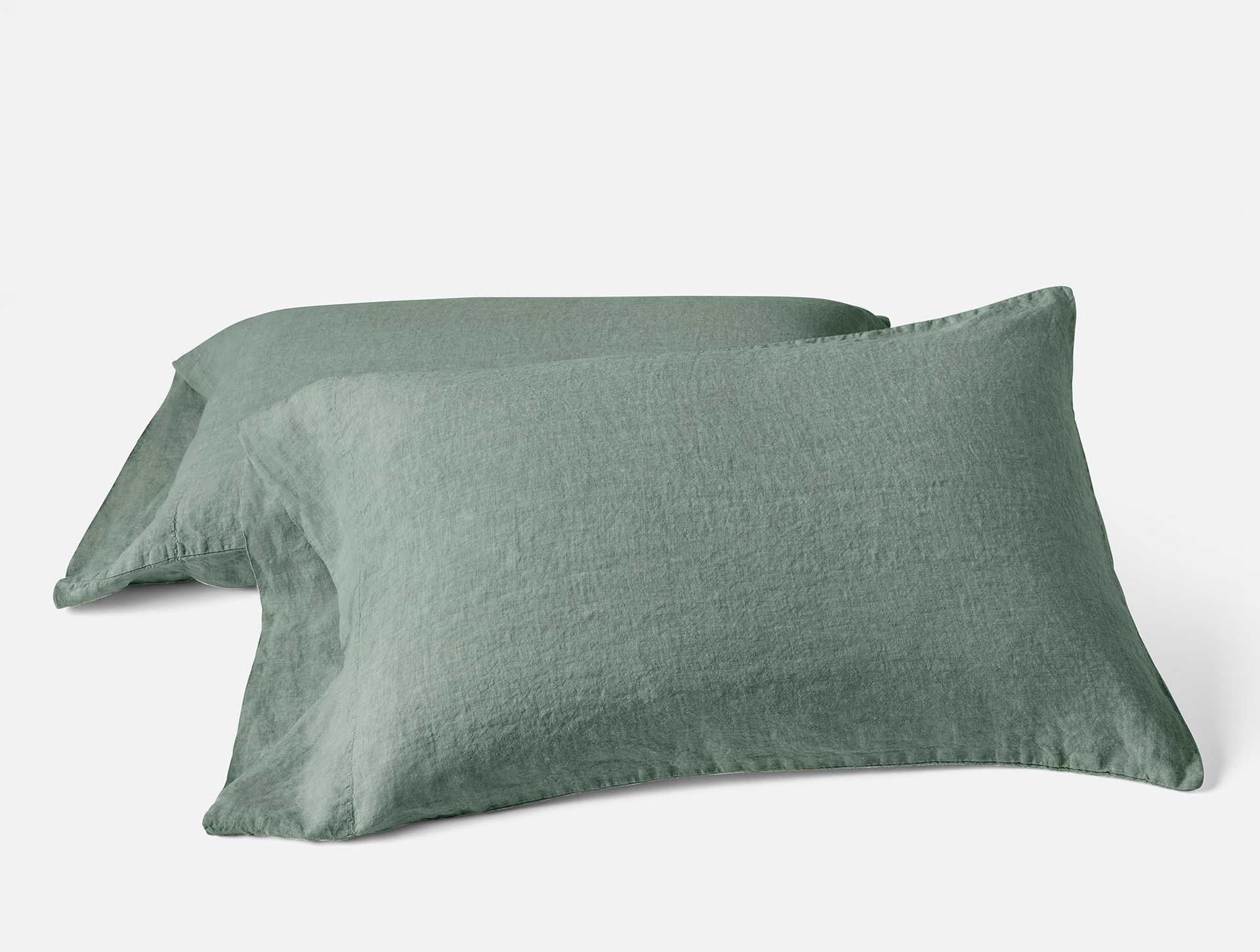
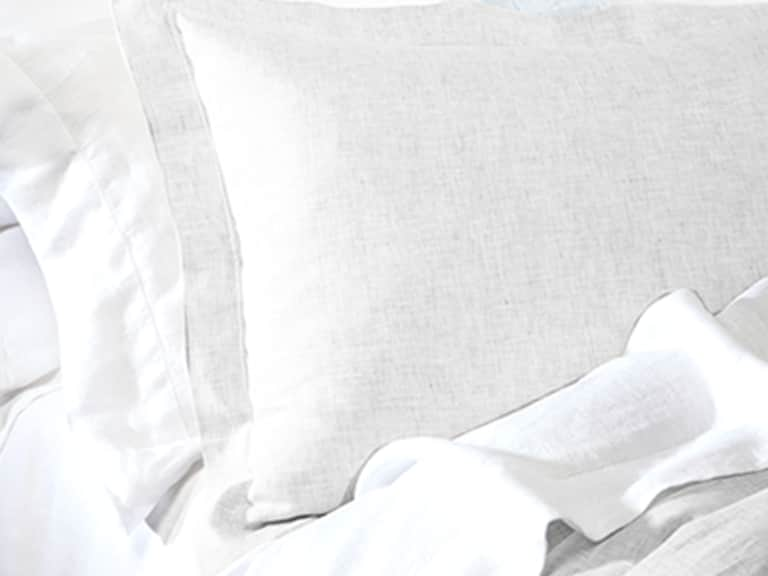
There is a particular pleasure in encountering a material that declines to conceal its origins. Linen creases. It holds the memory of a fold, catches the light unevenly, and carries a faint irregularity that can make a perfectly made bed look less like a display and more like a place where someone has slept. These qualities are not defects in the usual sense. They are part of the fabric’s account of itself: a record of fiber, yarn, weave, and use.
That account starts with flax. In the case of Naturepedic Organic Linen Sheets, the stated material details identify certified organic flax grown in France, linen fabric at 185 grams per square metre, and a stone-washed finish. The sheets are made in India in a GOTS-certified organic facility. Those facts offer a useful way into the larger subject of linen sheet production: what happens between a crop and a finished textile, and how much can a label tell us about the result?
The journey is not a straight line from field to bedroom. It passes through harvesting, fiber separation, preparation, spinning, weaving, finishing, and sewing. Some stages are centuries old; others depend on modern machinery and regulated production systems. To understand the cloth is to look not only at where its flax grew, but also at how the plant was handled, what sort of yarn was made from it, and how the woven fabric was finished.
A plant with a long textile memory
Flax is among the oldest cultivated fiber plants. Its slender stalk produces both seed and bast fiber: the useful textile material lies in bundles beneath the outer stem, around the woody core. Turning those bundles into linen requires separating the fibers without losing their length or strength. Unlike cotton, which grows around the seed, flax fiber runs along the stalk. The plant’s architecture determines much of the work that follows.
France is associated with a major European flax-growing tradition, particularly in the northern part of the country, where temperate conditions and suitable soils have supported cultivation. But a place name on a label is a beginning, not a complete biography. “Flax grown in France” tells the reader about the crop’s origin; it does not, by itself, specify the farm, the harvest year, the processing route, or the precise characteristics of the resulting yarn.
That distinction matters because linen is not a single, uniform substance. Fiber length, fineness, preparation, and spinning all influence the yarn. A fine, carefully prepared yarn can produce cloth with a different hand and appearance from a coarser one. Even within one fabric, natural variation is normal. Linen’s reputation for strength and its familiar texture emerge from the particular qualities of flax and from the choices made at each stage of production.
Growing practices also matter. Flax is an annual crop, and its cultivation sits within local systems of soil management, rotation, labor, and weather. Organic certification concerns the standards under which agricultural materials and subsequent processing are handled; it should not be read as a claim that every environmental question has been answered. To assess a textile fully, readers can look for clear information about fiber origin, certification scope, processing location, and the final product’s care and longevity.
From stalk to spinnable fiber
When flax reaches maturity, it is generally pulled or cut and left to dry. Pulling the plant can preserve more of the stalk’s usable length, though the method depends on farming and processing practices. Once harvested, the stalk must be prepared so that the bast fibers can be released from the woody material around them. This is where the vocabulary of traditional linen-making becomes a small map of the work.
Retting loosens the natural substances binding the fibers to the stalk. It can be carried out through controlled exposure to moisture, traditionally in fields or water, or by other methods used in contemporary processing. Retting requires judgment: insufficient treatment makes the fibers difficult to separate, while excessive treatment can weaken them. The aim is not to make the plant disappear, but to release the useful fibers with their strength intact.
After retting and drying, breaking crushes the woody core. Scutching removes much of the broken shive, the fragments of stem that cling to the fiber. Hackling then combs and aligns the fibers, separating longer strands from shorter material and preparing them for spinning. The terms sound almost like a sequence of tools in a workshop; in practice, they describe a combination of skilled handling and machinery that has been refined over generations.
Shorter fibers are not necessarily waste. They can be used for different grades of yarn and other purposes, while longer fibers are commonly prized for fine linen. The division helps explain why the phrase “flax linen” cannot alone predict a fabric’s softness or durability. The quality of the fiber preparation and the intended use of the yarn are part of the story, too.
At this point, the flax has not yet become cloth. It is still fiber—pale, flexible, and somewhat unruly. The next transformation, spinning, draws and twists the prepared fibers into yarn. The amount of twist, the yarn’s thickness, and the consistency of its preparation influence how it behaves on the loom and how the finished fabric feels against the hand.
The quiet mathematics of weaving
Weaving interlaces two systems of yarn. The warp runs lengthwise through the loom; the weft passes across it. The pattern of interlacement determines the weave structure, while yarn quality, density, and tension shape the cloth’s weight and drape. A plain weave, for example, alternates the crossing yarns in a simple, regular order. More elaborate structures can create different surfaces and patterns, but no weave can compensate entirely for poor yarn or inconsistent construction.
In a bed sheet, the practical requirements are unusually intimate. The cloth must endure repeated movement and laundering, lie comfortably against skin, and be cut and sewn to fit a mattress. It also has to make sense as part of a larger bedding system: a fitted sheet needs sufficient pocket depth and secure elastic; a flat sheet needs enough width and length to tuck or drape; pillowcases must correspond to pillow dimensions. The artistry is partly in getting these ordinary details right.
Naturepedic lists its organic linen sheets at 185 gsm, or grams per square metre. Fabric weight is one useful point of comparison because it describes the mass of a given area of cloth. It is not a complete measure of quality, softness, durability, or warmth. Two fabrics with the same weight may feel quite different because their yarns, weave density, finishing, and fiber characteristics differ. A number is helpful; it is not a verdict.
Likewise, thread count has limited usefulness when comparing linen with cotton. The measurement is most familiar in cotton bedding and does not translate neatly into an all-purpose quality score across fibers and weave structures. For linen, a reader may learn more from the stated fiber composition, weight, weave description, origin, construction, and care instructions than from searching for a thread-count figure that may not be supplied or may not mean what it seems to mean.
The Naturepedic sheets are described as made in India in a GOTS-certified organic facility, using flax grown in France. This distinction between agricultural origin and manufacturing location is important. A textile can travel across borders at several points in its life. Knowing where the flax was grown and where the finished product was made gives a more useful picture than a single, broad label such as “European linen” or “imported linen.”
What finishing changes
Once the fabric comes off the loom, it may undergo finishing processes that change its appearance, hand, or performance. Washing can remove processing residues and relax the cloth. Dyeing introduces color; bleaching alters the ground; mechanical treatments may create a particular surface. The precise combination varies by mill and product. In the Naturepedic description, the linen is stone-washed, a finishing approach associated with a softer, more relaxed feel than an untreated, rigidly crisp surface.
“Stone-washed” is a description of finish, not a guarantee that two fabrics will feel identical. The result depends on the fabric, the wash process, and how the treatment is controlled. It can give linen a lived-in quality from the outset, while repeated home laundering may continue to change the cloth. Linen often becomes more pliable with use, though the pace and degree depend on the textile and the way it is cared for.
Finishing is also where simple claims can become complicated. A natural fiber is not automatically processed without chemicals, and “organic” does not mean that every stage is impact-free. Certification schemes define requirements within a particular scope. GOTS, the Global Organic Textile Standard, addresses organic textile processing and production criteria; the exact certification claim should be understood in relation to the certified product and facility. Readers seeking detail can consult the standard and the manufacturer’s current documentation rather than treating a certification name as a universal description of every environmental attribute.
For consumers, the useful question is not whether a finish sounds luxurious, but what it contributes and whether it suits the intended use. A soft surface may feel welcoming at first touch. A well-made construction should also withstand regular use. The best measure of a sheet is not its first impression alone, but the way it performs over many nights and many wash cycles.
Why linen feels the way it does
Linen’s appeal is partly tactile and partly climatic. Its relatively open structure can encourage air movement, and flax fibers can take up moisture. These properties are often described as breathability and moisture management. They help explain why linen bedding is frequently chosen by people who prefer a less clammy, more ventilated sleep surface. They do not mean that a sheet can regulate body temperature independently of room conditions, bedding layers, or the sleeper.
Compared with some cotton sheets, linen can feel more textured at first. It may have a dry, crisp touch, then relax with use. This is not an argument that every sleeper will prefer it. Some people like the smoothness of a tightly finished cotton fabric; others welcome the slight irregularity of linen. Comfort is personal, and the language of luxury can obscure that simple fact. A material can be beautifully made and still not be the right material for everyone.
The Naturepedic description presents the sheets as breathable and suitable across seasons, with a weighty but airy character. That balance is part of linen’s particular charm: it can feel substantial without behaving like a dense blanket. Yet the most sensible approach is to consider the whole bed—mattress, duvet, room temperature, and sleeping habits—rather than expecting any one sheet to solve every comfort problem.
People who experience allergies or skin sensitivity may also pay attention to fiber composition and finishing. Organic certification can provide information about production requirements, but it is not a medical guarantee and does not establish that a product will suit every sensitive sleeper. Clear product details, careful laundering, and personal experience remain important. For persistent symptoms, textile selection is no substitute for professional health advice.
Care as part of the craft
A sheet’s useful life depends not only on how it is made but on what happens at home. Naturepedic’s care guidance for its organic linen sheets is to machine wash warm, tumble dry low, warm iron if desired, and avoid bleach. The manufacturer’s instructions should take precedence over general linen lore, because finishing and construction can influence the safest routine.
In practical terms, avoid overcrowding the washer. Fabric needs room to move and rinse. Use an appropriate amount of detergent, and avoid relying on harsh bleaching agents to restore brightness. Lower dryer heat is generally gentler than high heat, and removing linen before it becomes bone-dry can help limit unnecessary stress. If ironing matters to you, linen can be pressed while slightly damp; if it does not, the natural creasing is part of the material’s appearance rather than a failure of housekeeping.
Care should not be confused with delicacy. Linen is valued for strength, but strength is not indestructibility. Repeated high heat, aggressive chemicals, crowded loads, and rough handling can shorten the life of many textiles. A measured routine—washing when needed, using suitable temperatures, and following the label—can support both cleanliness and longevity.
There is an environmental dimension to this domestic work. A durable sheet used for years can offer a different pattern of consumption from a short-lived one, although durability alone does not settle every question about resource use or manufacturing impact. The care label is therefore more than a set of instructions. It is part of the relationship between a finished textile and the household that keeps it in service.
Reading the label without asking it to say everything
When examining linen bedding, start with the composition. Is the fabric 100 percent linen, or a blend? Then look for the origin of the flax, the location of weaving or manufacture, the fabric weight if supplied, and the relevant certification. Construction details—fitted-sheet depth, elastic, seams, closures, and the contents of a set—are not glamorous, but they determine whether the product will work in an actual bedroom.
Next, consider finish and care. A stone-washed surface may suit someone who wants softness from the beginning; a different finish may preserve a crisper character. Check whether the sheet can be machine washed and whether the recommended temperature fits your routine. The right choice is not the most elaborate specification. It is the one whose material, construction, care demands, and feel align with how you live.
For Naturepedic Organic Linen Sheets, the available details offer a fairly legible outline: French-grown certified organic flax; 185 gsm linen; stone-washed finishing; production in India at a GOTS-certified organic facility; and home-care instructions specifying warm washing, low tumble drying, optional warm ironing, and no bleach. They do not disclose every technical step of the yarn-making or weaving process. That absence should not be filled with invention. It is simply a reminder that the story of a textile is often distributed across a product page, a certification record, a care label, and the broader history of the craft.
It is also why provenance deserves careful language. “French flax” refers to the plant’s growing origin, not necessarily to the location where the fiber was spun, the fabric woven, or the sheet sewn. “Linen” names the textile made from flax fiber, not a complete map of its journey. Each place in the chain contributes a different kind of information.
A finished sheet, and the history folded inside it
By the time linen reaches the bed, the field is far away in every practical sense. The stalk has been harvested, retted, broken, scutched, and hackled. Fibers have been spun into yarn; yarns have crossed on a loom; the cloth has been finished, cut, and sewn. What remains is not merely a soft surface but the accumulated result of agriculture, textile knowledge, industrial organization, and domestic use.
That long sequence explains why linen can feel both ancient and thoroughly contemporary. Its production depends on inherited techniques, but its present-day identity is shaped by modern certification, global supply chains, mechanized mills, and changing ideas about responsible sourcing. A sheet may connect a field in France to a certified facility in India and then to a bedroom somewhere else. The route is international; the object itself is quiet.
Luxury, in this setting, need not mean conspicuousness. It can mean that the material is traceable enough to invite questions, that the construction is suited to repeated use, and that the fabric becomes more comfortable rather than less interesting with time. Linen does not hide every crease or erase every sign of use. It gives them a place in the design.
To sleep on linen is, in a modest way, to encounter the work of transformation: a tall, fibrous plant made into yarn, then cloth, then a familiar household object. The finished sheet can be folded, washed, and folded again, each cycle carrying the fabric a little further from the field and a little deeper into the life of a home. Its appeal lies not only in what it feels like at first touch, but in the craft that made that touch possible.
At a glance: the Naturepedic linen details
- Fiber: Organic flax grown in France.
- Fabric weight: 185 gsm.
- Finish: Stone-washed.
- Production: Made in India in a GOTS-certified organic facility.
- Care: Machine wash warm, tumble dry low, warm iron if desired, and do not bleach.