Textile Craft & Bedding
Inside Sferra’s Sheet-Making: Weave, Finishing, and Feel
A sheet is a simple object with an unexpectedly complicated life. It is folded, slept on, washed, dried, tucked, untucked, and judged in the dark by a hand that may not be fully awake. Its character depends on more than the fiber named on the label: weave, finishing, and construction all help determine how it feels, how it looks, and how gracefully it answers to use.
Published October 17, 2026
There is a particular sort of confidence in a well-made sheet. It does not announce itself. It lies flat, gives a little when pulled, and seems to have arrived at the bed by the most natural route possible. Yet beneath this quiet ease is a sequence of decisions: what fiber to spin, how to interlace the yarns, how tightly to set them, and what to do to the cloth once it has come off the loom. These are the decisions that turn textile into touch.
Sferra offers a useful point of entry into those questions, not because a name on a label can explain every sensation, but because premium bedding invites closer attention to the details many shoppers overlook. A sheet can be described as cotton, linen, percale, or sateen; each word tells part of the story. The rest is written in the fabric’s surface, weight, finish, and construction—the evidence one encounters when lifting a corner or smoothing a palm across the bed.
Understanding sheet-making is not a matter of memorizing luxury vocabulary. It is a way of becoming more exact about preference. Some people want a cool, crisp surface that seems to hold its shape. Others prefer a softer drape, a gentle sheen, or a fabric that grows less formal with every wash. The question is not which sheet is universally best. It is what kind of cloth makes a bedroom feel like a place to rest.
The first distinction: fiber and weave are not the same thing
Fiber is the raw material. Cotton and flax are fibers; linen is the fabric made from flax. Weave is the method by which yarns cross one another to form cloth. This distinction sounds elementary, but it clears up a surprising amount of confusion. A sheet may be made from cotton and woven as percale, or cotton and woven as sateen. The fiber remains the same while the surface and behavior change.
Imagine two baskets made from the same straw. One is tightly and evenly woven; the other has a looser, more fluid pattern. The material matters, but so does the arrangement. In a sheet, weave affects the way light catches the surface, how the cloth moves, and how it meets the skin. It also influences how the fabric responds to repeated laundering, though fiber quality, yarn preparation, density, and finishing matter too.
Labels are useful, but they are not complete descriptions. The word “cotton” does not by itself promise crispness, softness, breathability, or durability. Nor does “linen” guarantee a particular weight or degree of rumple. Construction details are the supporting cast: yarn quality, weave structure, seam work, hems, and the way the finished cloth has been treated. A sheet is a small textile system, not a single adjective.
Percale: the architecture of a crisp surface
Percale is commonly associated with a plain, balanced weave, in which the yarns cross in a regular over-and-under pattern. Its appeal is often described as crisp, cool, and matte. The description is tactile rather than absolute: one percale may feel lighter or softer than another, depending on the yarns and the fabric’s construction. Still, the familiar impression is clear. Percale tends to offer a composed surface, with a neatness that can feel almost freshly pressed even when the bed has not been.
That crispness is not the same as stiffness. A well-made percale can be light and comfortable while retaining a certain structure. It may suit sleepers who prefer a cool hand and a clean, uncluttered appearance. The cloth’s matte surface also gives it a restrained look, less reflective than a sateen finish. In a bedroom, that restraint can be pleasing: the bed appears orderly without seeming polished to the point of ceremony.
Percale’s character can shift with use. Washing may soften the fabric, while drying and ironing habits influence how smooth or relaxed it appears. A sheet that feels especially crisp straight from the package may settle into a more familiar hand after several laundering cycles. This is one reason it is useful to distinguish the new-sheet impression from the long-term one. Bedding is not a swatch in a showroom; it is cloth expected to live alongside a body.
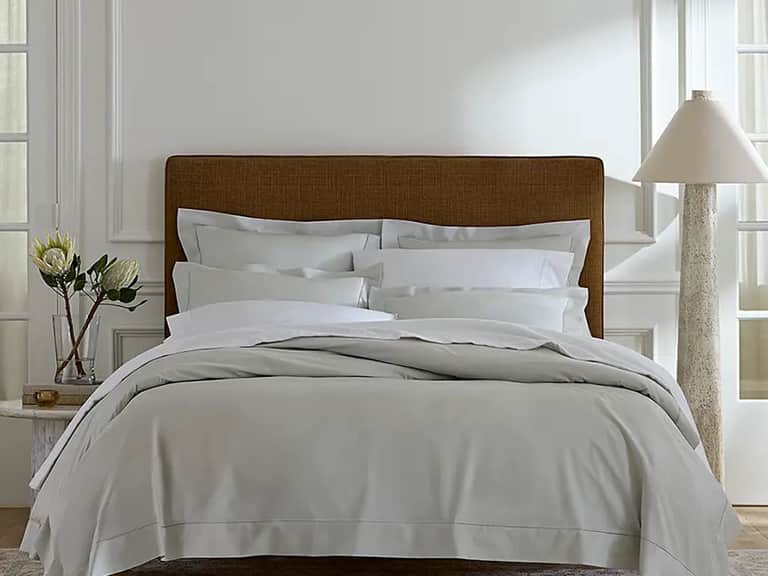
The Sferra Luxor Fitted Sheet provides a concrete example of how these details are presented in a product description: it is made from Egyptian cotton in a percale weave, described as light and airy, with a cool feel and matte finish. Hemstitching adds a tailored edge. These specifications help a reader imagine the sheet, while also showing why fiber, weave, hand, and finish should be considered separately. The material is cotton; percale describes the construction; the matte surface and hem are further parts of its character.
Sateen: a different conversation with light
Sateen is also a cotton weave, but its arrangement typically allows more yarn to sit on the surface. The result often has a smoother hand and a soft luster. It can feel more fluid than percale, with a drape that settles rather than holds its line. The difference is not simply “shiny” versus “not shiny.” It is a change in the way the cloth handles light and movement: sateen may look gently luminous, while percale tends toward a quieter, flatter finish.
For some sleepers, that smoothness is the point. For others, the appeal of a sheet lies in the dry, crisp touch of percale. Neither preference is a verdict on quality. The weave changes the experience, and a thoughtful choice begins by noticing which experience feels inviting. A person who loves a freshly laundered shirt may gravitate toward crispness; someone who likes the softened fall of a well-worn cotton robe may prefer a more fluid surface. Domestic taste is often less abstract than it first appears.
Weave names are useful guides, not guarantees. Sateen can vary in weight and sheen; percale can vary in softness and firmness. Even within the same weave, the character of the yarn, the density of the fabric, and the finishing process create differences. This is why a count or a single marketing phrase rarely tells the whole story. Numbers can describe some aspects of construction, but they cannot substitute for a clear account of how the fabric is made and what it feels like.
Finishing: the part that changes first impressions
Once a fabric has been woven, it may undergo finishing processes intended to clean, stabilize, soften, smooth, or otherwise prepare it for use. Some finishing treatments are physical; others involve chemicals or combinations of methods. The exact process varies. It is best not to assume that every soft sheet has been treated in the same way, or that a particular finish can be inferred from a photograph or a short product name.
Stone-washing, garment-washing, brushing, and other finishing terms describe different approaches, and brands do not always use language in identical ways. In general, washing or mechanical treatment can relax a fabric and reduce the sense of newness. A finish may make a sheet feel soft before its first wash; it may also affect the way the cloth drapes or how much it wrinkles. These treatments are part of the textile’s design, not decorative footnotes.
Finishing can also influence appearance. A smooth, pressed surface reads differently from a relaxed one. A subtle luster may emphasize folds; a matte finish can make the same folds seem quieter. The important point is that “soft” is not a complete technical description. It could refer to the fiber, yarn, weave, finishing, or some combination of all four. To compare sheets fairly, look for specific information and consider the fabric as a whole.
Care instructions offer another clue to how a maker expects the textile to be used. A recommendation to wash gently, avoid bleach, or remove the cloth while still damp may protect the material and its finish. Such instructions are not obstacles to luxury. They are part of the relationship between cloth and household: a durable textile still benefits from thoughtful care, and even a robust sheet can be worn down by unnecessary heat, harsh detergents, or over-drying.
Linen and cotton: different fibers, different temperaments
Linen begins with flax, whose fibers are made into yarn and then woven into cloth. Cotton begins with a different plant fiber and is processed into yarn by different means. The fabrics do not behave identically. Linen is often valued for its textured surface, strength, and relaxed drape; cotton can be made into a wide range of cloths, from crisp percale to smooth sateen. In both cases, the final hand depends on more than the plant from which the fiber came.
Linen’s visible irregularities are sometimes treated as flaws by people accustomed to perfectly smooth surfaces. They are better understood as part of the fabric’s character. Small variations in yarn and weave can give linen a living texture, one that changes with use rather than resisting every sign of it. The cloth may crease readily, but a crease is not necessarily evidence of poor construction. It may simply be the record of a body, a folded corner, or a night spent sleeping.
Cotton, meanwhile, is not a single sensation. Its versatility is one of its defining qualities. In a percale weave it can feel cool and crisp; in sateen it may feel smoother and more fluid. That range is why comparing a linen sheet with “cotton” in the abstract can be misleading. A more useful comparison names the fiber, weave, weight, finish, and intended hand.
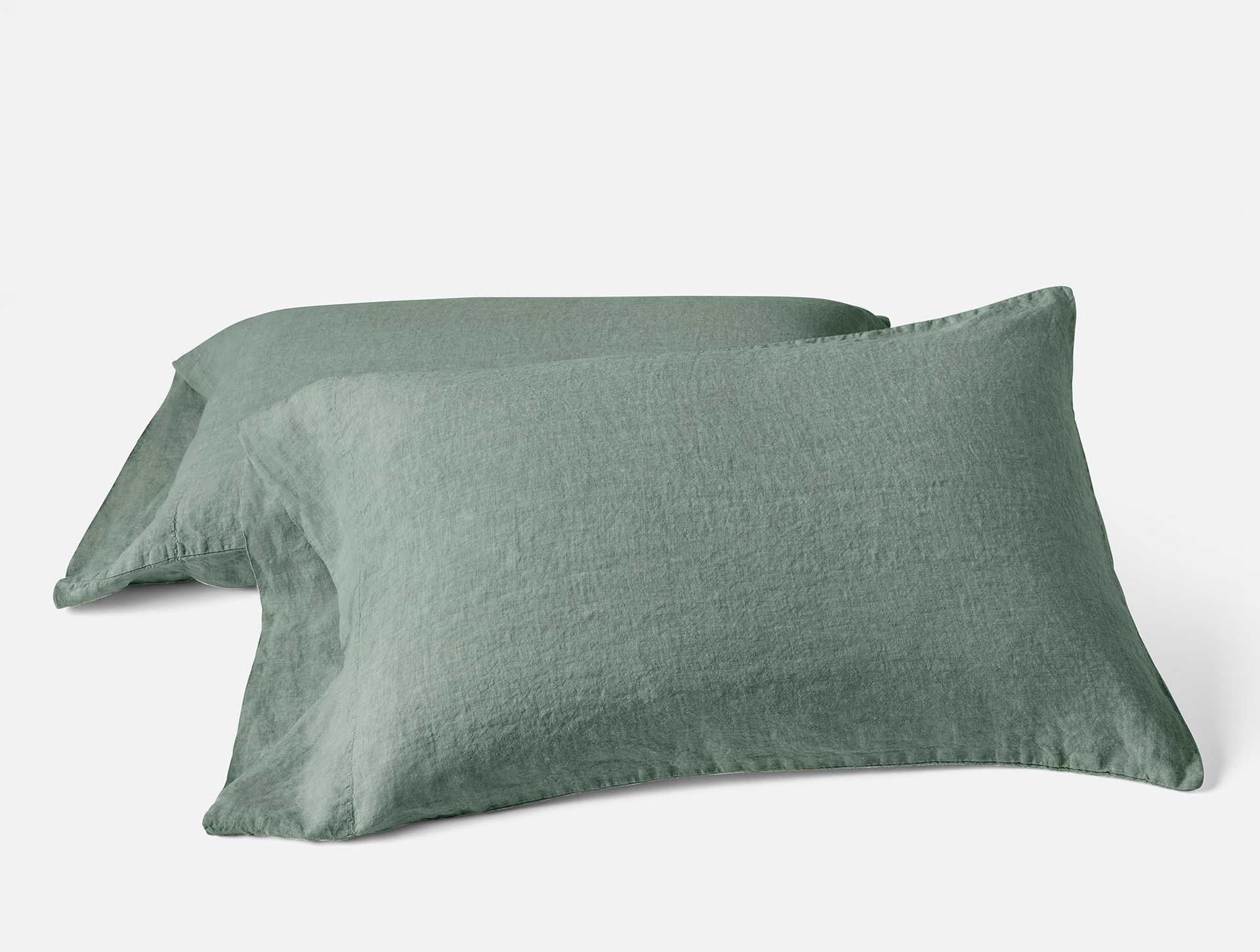
For readers interested in an alternative to cotton percale, the site’s Organic Relaxed Linen Pillowcases offer a separate example of material and finishing working together. They are described as made from organic French flax, woven in Portugal, and finished with pick-stitched cuffs and a plant-based softener. The pillowcases are not Sferra sheets, and they should not be mistaken for the same construction. They do, however, illustrate how provenance, weave, finish, and garment details contribute to a textile’s identity.
Construction shows up at the edges
The central field of a sheet receives most of the attention, but its edges reveal a good deal about the maker’s decisions. Hems, flanges, and hemstitching may be decorative, structural, or both. A hemstitch is a finishing detail that creates a small, visible rhythm near the edge. A flange creates a border that stands slightly beyond the main surface. Neither detail changes the fiber, but both affect the way a bed is framed and how finished it appears.
Fit matters just as much. A fitted sheet must correspond to the dimensions and depth of a mattress; elastic, pocket depth, and corner construction influence whether it stays in place. A sheet that is beautifully woven but constantly slips from the mattress may be a poor match for a particular bed. Checking dimensions is not an ungenerous, unromantic task. It is the practical side of comfort, and it prevents a fine textile from becoming a nightly negotiation.
In a sheet set, the flat sheet, fitted sheet, and pillowcases may each have different roles. Pillowcases receive frequent contact and laundering. Fitted sheets are under tension at the corners. Flat sheets are folded, tucked, and pulled. A collection should be judged not only by its appearance as a set, but by how its components are constructed for their particular jobs.
How to compare sheets without getting lost in the language
When examining premium bedding, begin with a handful of grounded questions. What is the fiber? What is the weave? How is the fabric described—crisp, smooth, relaxed, matte, or lustrous? What does the product information say about finishing and care? Are the dimensions and construction appropriate for the mattress? These questions make the comparison more useful than relying on a single prestige word.
- Read the fiber and weave separately. “Cotton percale” gives two pieces of information; neither should be made to stand in for the other.
- Look for a description of the hand. Terms such as cool, crisp, smooth, or relaxed can help, especially when paired with material and weave details.
- Check construction and measurements. Pocket depth, elastic, hems, and closures affect everyday use as much as appearance.
- Consider the care routine. Washing temperature, drying method, and restrictions on bleach or softener can influence how the textile ages.
- Think beyond the first touch. Ask whether you want the sheet to remain crisp, become softer, or develop a more relaxed surface with use.
Thread count is often given more weight than it deserves in casual conversation. It describes the number of threads in a measured area, but it does not, on its own, establish fiber quality, yarn construction, finishing, or feel. Like any single measurement, it can be informative within context and misleading when treated as a ranking. A well-made sheet is not a math problem with one winning answer.
The useful luxury of paying attention
Luxury bedding is sometimes discussed as though the price were the story. Price may reflect materials, manufacture, sourcing, design, and brand positioning, but it cannot tell a sleeper whether a particular weave feels right. The more rewarding approach is to pay attention to the textile itself. What happens when it is unfolded? Does the cloth have weight or lift? Is its surface cool, smooth, dry, or softly textured? How does it fall over the edge of the bed?
These are ordinary observations, but they are also the beginning of textile literacy. To learn the difference between a plain weave and a sateen, or to notice how a hemstitch quiets an edge, is to see that a household object contains decisions made across fields, mills, and finishing rooms. The sheet is not merely the part of the bed that touches the body. It is the final expression of a long chain of craft.
Sferra’s name in a discussion of bedding can prompt a more general question: what, exactly, makes a sheet feel considered? The answer is rarely one flourish. It is the meeting of suitable fiber, thoughtful weave, controlled finishing, sound construction, and a care routine that allows the cloth to endure. The best sheet is not necessarily the one that makes the grandest first impression. It may be the one that becomes so familiar, so easy to live with, that it stops asking to be noticed.
That is perhaps the paradox of a fine sheet. Its making rewards close attention; its purpose is to let the person using it forget the making entirely. The weave, the edge, the softening, the small give of fabric under a hand—all of it disappears into the simple fact of a bed prepared for sleep. And then, in the morning, the cloth is there again: creased, quiet, and ready for another night.
A quick guide to sheet terminology
- Fiber
- The material used to make the yarn, such as cotton or flax.
- Weave
- The arrangement of yarns that forms the fabric, influencing surface, drape, and feel.
- Percale
- A plain-weave construction commonly associated with a crisp, matte hand.
- Sateen
- A weave often associated with a smoother surface and gentle luster.
- Finishing
- Processes applied after weaving that can affect softness, appearance, stability, and drape.
- Hemstitch
- A decorative edge detail used to give a hem a distinct, finely worked appearance.