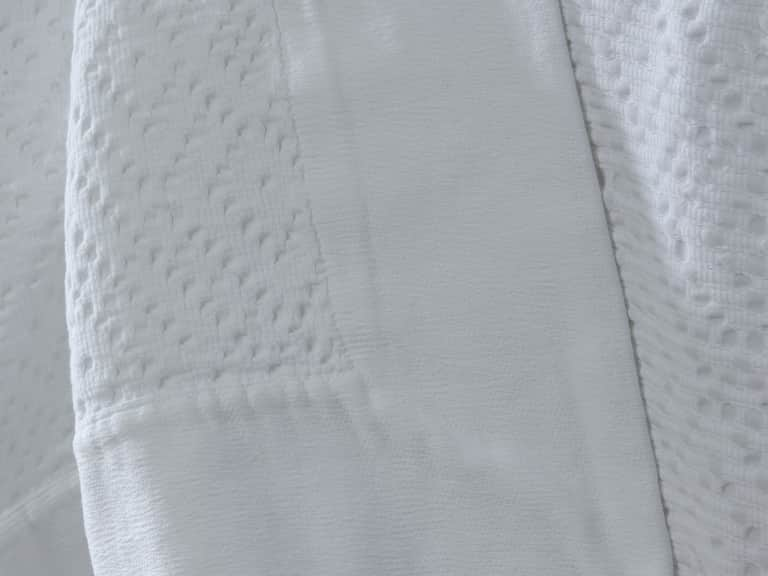
Blankets and quilts add adaptable layers to bedding, contributing warmth, texture, and visual definition without replacing foundational sheets. Their weight and construction influence how they perform across seasons and sleeping preferences. Understanding these differences helps clarify how a coverlet, blanket, or quilt can complement a bedroom’s existing bedding arrangement.
Blankets are generally flexible layers used for added warmth, while quilts typically combine a decorative top, insulating fill, and backing joined by stitching. Coverlets are often lighter and designed to lie over sheets or other bedding. These distinctions can help determine which layer suits a climate, room, or preferred level of coverage.
The Bovi Madeira Linen Coverlet is a linen bedding layer intended to provide a lighter alternative to a thick quilt or comforter. Linen’s naturally textured appearance brings subtle surface detail, while its breathable character can support comfortable layering. As a coverlet, it can add coverage over sheets without creating the bulk of heavier bedding.
Blankets and quilts can be coordinated with pillows, sheets, and duvet covers to create a layered sleep setup. Consider fabric feel, overall weight, and how each piece will be used together. For example, a lightweight coverlet may serve as a finishing layer, while a blanket provides flexible warmth when room temperatures change.
Material and construction also affect comfort, maintenance, and seasonal usefulness. Linen layers are valued for their distinctive texture and airflow, whereas the warmth of quilts depends partly on their fill and stitching. Mattress materials such as latex can influence sleep comfort, but blankets and quilts remain separate layers chosen for surface warmth and coverage.
 Bedding